
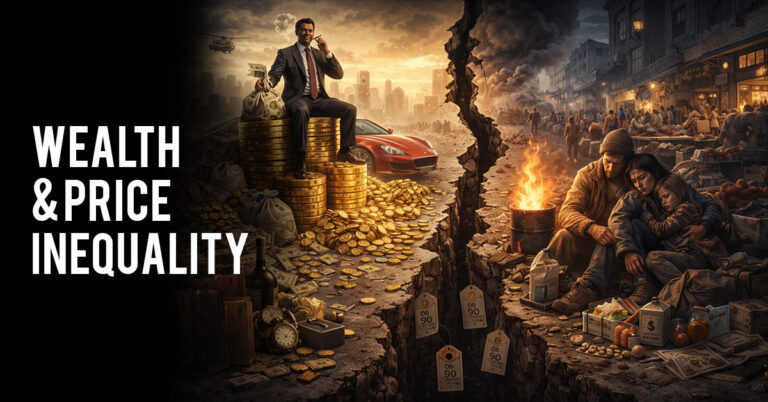
Wealth and price inequality have become defining features of modern economic life. While inequality has always existed, its current scale and visibility mark a significant departure from earlier eras. Watching this divide grow reveals not only economic imbalance but structural shifts that affect opportunity, stability, and social cohesion.
In previous decades, income growth more closely tracked productivity. Middle-class wages rose alongside economic expansion. While disparities remained, the distance between earnings and the cost of living was manageable. Education, housing, and healthcare, though imperfect, were broadly accessible.
Over time, this balance changed. Wealth is concentrated at the top, driven by financialization, technological advantage, and favorable policy structures. Asset ownership, rather than labor, became the primary engine of wealth accumulation. Those without assets fell behind, regardless of effort or education.
At the same time, prices rose unevenly. Essentials such as housing, healthcare, and education increased faster than wages. Inflation did not affect all goods equally; it targeted necessities. This created pressure not just on the poor, but on the middle class, eroding financial security.
Price inequality compounds wealth inequality. When basic costs rise faster than income, opportunity narrows. Saving becomes difficult. Risk becomes unavoidable. Economic mobility declines, reinforcing generational disparity.
Public discourse often simplifies the issue, framing inequality as a moral failure or personal shortcoming. In reality, it is structural. Systems reward capital over labor, scale over participation, and access over contribution.
The social consequences are significant. Economic stress fuels political polarization, resentment, and distrust. Citizens lose confidence in institutions that appear unresponsive or indifferent. Stability weakens as financial pressure becomes constant.
Addressing inequality requires more than rhetoric. It demands policy, accountability, and long-term thinking. Markets function best when opportunity is broad, and trust is maintained.
Watching wealth and price inequality grow reminds us that economies are human systems. When imbalance becomes extreme, consequences follow, not immediately, but inevitably. Sustainable prosperity depends not on accumulation alone, but on fairness, access, and shared stability.