
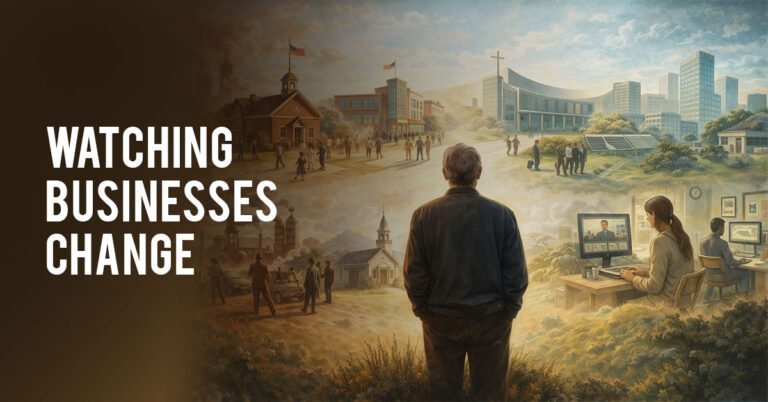
Business has never been static, but the nature of change has accelerated dramatically over the past several decades. What once evolved gradually through innovation, competition, and consumer demand now shifts rapidly under pressure from technology, global markets, and financial expectations. Watching businesses change over time reveals not just new models of operation, but a fundamental redefinition of purpose.
Earlier generations of businesses were often grounded in long-term relationships. Companies grew slowly, prioritizing stability, reputation, and continuity. Ownership was frequently local or family-based, and success was measured by durability rather than speed. Employees expected careers rather than contracts, and businesses understood their role within a broader community.
Over time, incentives changed. Shareholder value became the dominant metric. Quarterly earnings replaced long-term planning. Growth was no longer optional; it was mandatory. Businesses adapted to survive, but adaptation came with consequences. Decisions once guided by judgment and experience are increasingly driven by data, metrics, and short-term performance indicators.
Technology accelerated this transformation. Automation increased efficiency but reduced human discretion. Digital platforms disrupted traditional industries, rewarding scale over craftsmanship and reach over responsibility. Companies that could move fast dominated markets, while those that hesitated disappeared. The pressure to innovate became constant, leaving little room for reflection.
Globalization further reshaped business priorities. Supply chains extended across borders, separating production from consumption. Accountability became diffuse. When consequences are distant, responsibility weakens. The result was efficiency without intimacy, systems that functioned smoothly but lacked connection.
Employees felt these changes acutely. Job security declined as flexibility became a euphemism for instability. Loyalty, once mutual, became transactional. Workers were asked to adapt continuously, often without clear paths for advancement or protection. Businesses gained agility but lost cohesion.
Yet change itself is not the enemy. Innovation has improved productivity, expanded access, and created opportunity. The problem lies in the imbalance. When businesses prioritize growth without considering impact, trust erodes. Customers notice. Employees disengage. Communities weaken.
Watching businesses change teaches an essential lesson: organizations reflect what they reward. If profit alone defines success, other values fade. Sustainable business requires more than efficiency; it requires judgment, responsibility, and an understanding that long-term success depends on trust as much as it does on performance.